Beyond Basic Chatbots: Building Intelligent Assistants with RAG and Large Language Models
Beyond Basic Chatbots: Building Intelligent Assistants with RAG and Large Language Models
AI chatbots have evolved significantly over the past few years. Traditional chatbots mainly relied on predefined rules and responses, while modern AI assistants can understand natural language, interpret questions, and generate contextually relevant answers.
However, even powerful language models have limitations. They may provide outdated information, generate incorrect responses, or lack access to private organizational knowledge.
This is where Retrieval-Augmented Generation (RAG) becomes useful.
What Is Retrieval-Augmented Generation?
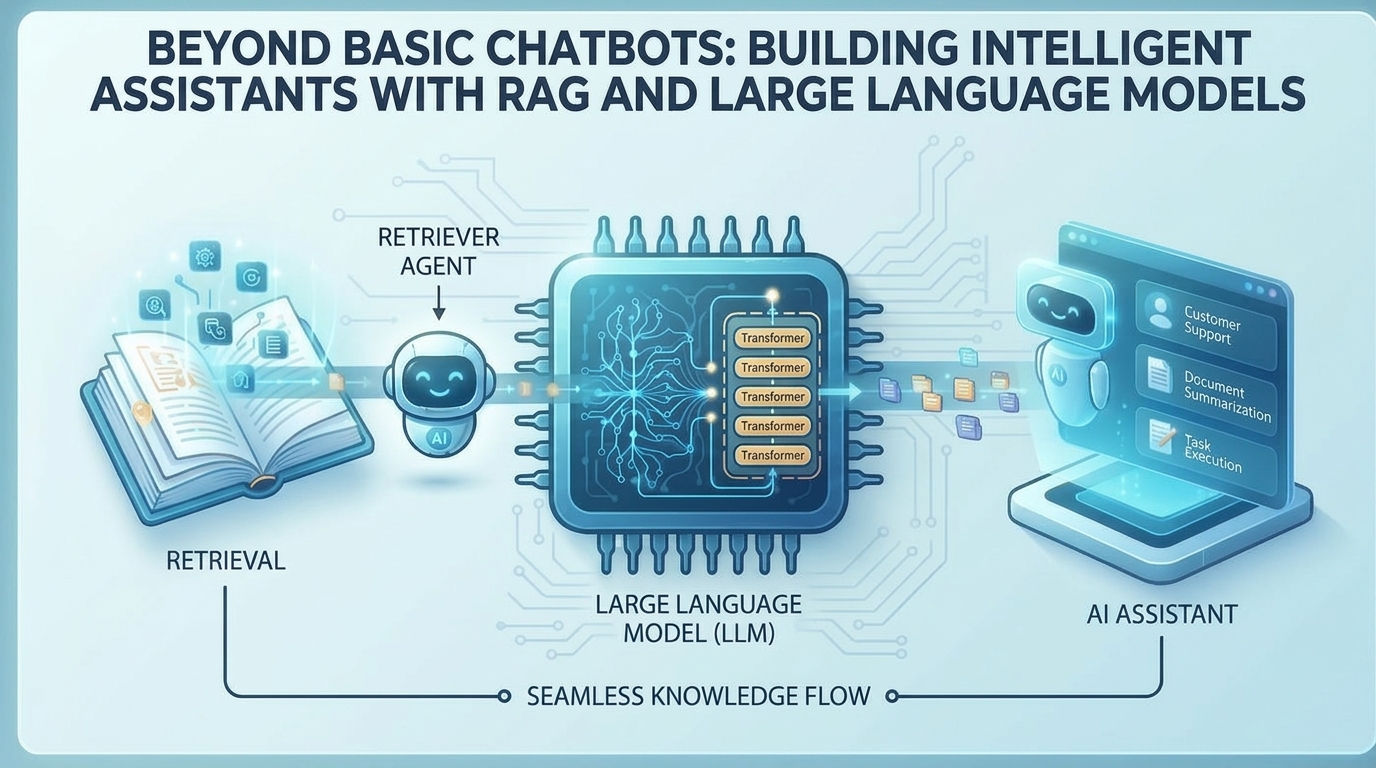
RAG is an approach that combines information retrieval with large language models. Instead of relying entirely on information learned during training, an AI application retrieves relevant information from an external knowledge source before generating a response.
For example, imagine building an AI assistant for a university. Students could ask questions about admission requirements, academic policies, scholarships, and university regulations.
Rather than expecting the language model to know all these details, the application retrieves relevant information from university documents and provides it as context to the model.
How Does a RAG Chatbot Work?
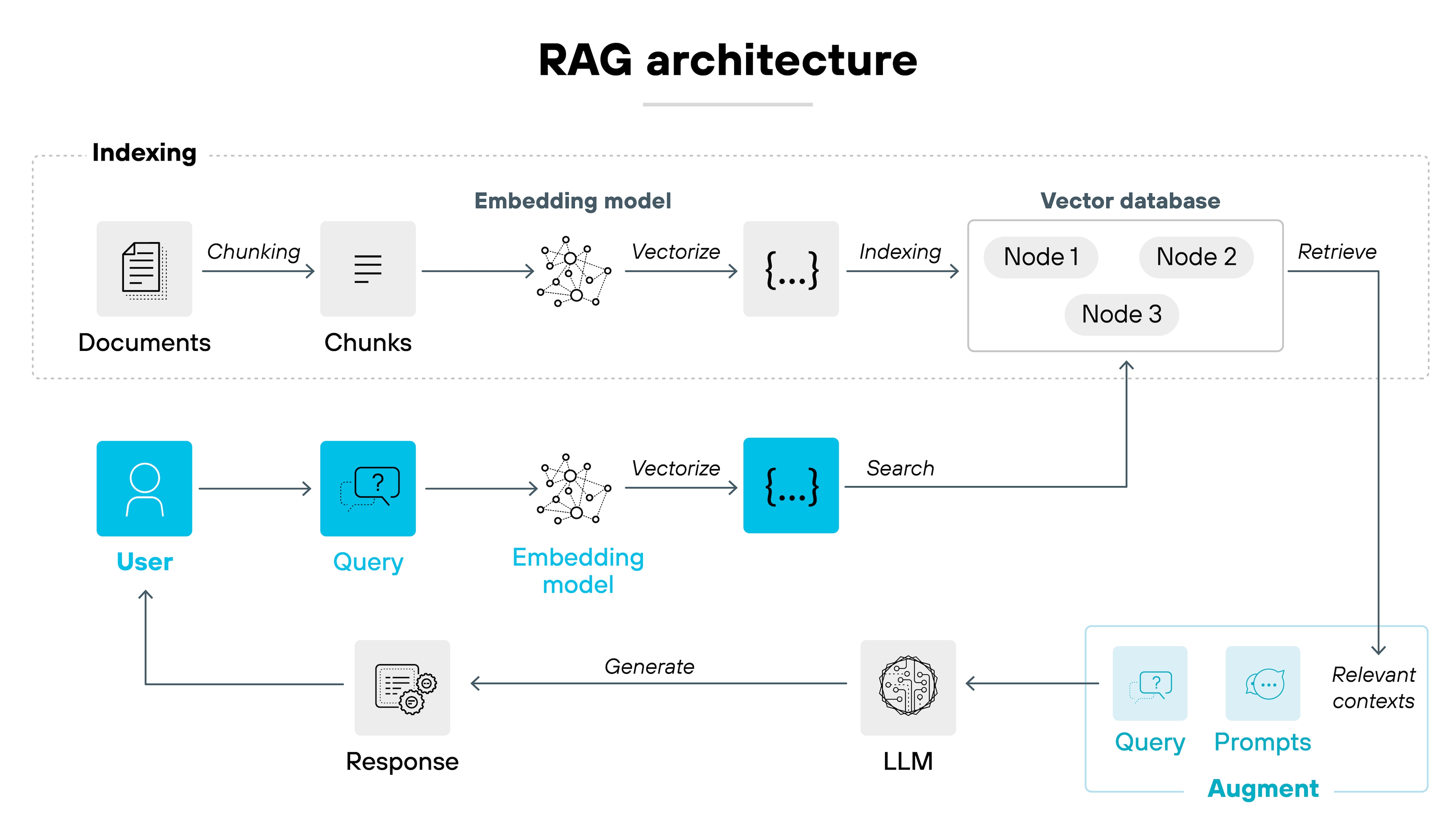
A typical RAG pipeline involves several steps:
- Document Processing: Upload documents such as PDFs, Word files, and text files.
- Text Chunking: Divide large documents into smaller sections that can be processed efficiently.
- Embedding Generation: Convert text sections into numerical representations called embeddings.
- Vector Storage: Store embeddings in a vector database such as ChromaDB or Qdrant.
- Semantic Retrieval: Search for information that is conceptually relevant to the user's question.
- Response Generation: Provide retrieved information to an LLM to generate a contextual response.
Technologies Behind Modern AI Chatbots
Python provides a strong ecosystem for developing AI-powered applications.
- LangChain: Helps integrate language models, retrieval systems, and external tools.
- LangGraph: Supports stateful and structured AI workflows.
- ChromaDB: Provides vector storage and similarity search capabilities.
- FastAPI: Can expose chatbot functionality through backend APIs.
- LLM APIs: Provide the language models responsible for generating responses.
Challenges Developers Should Consider
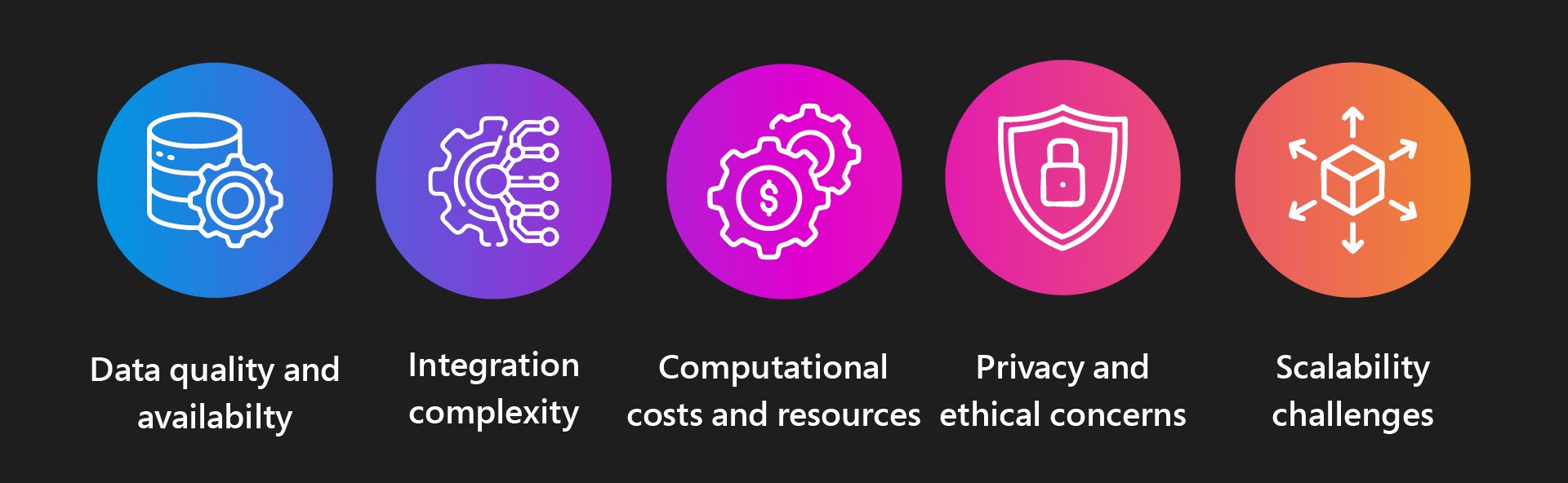
A RAG chatbot is not automatically accurate just because it uses a vector database. Poor document extraction, inappropriate chunk sizes, weak retrieval, and irrelevant context can reduce response quality.
Developers should evaluate retrieval quality, test responses against known questions, and provide source references whenever possible.
Final Thoughts
RAG makes it possible to build AI assistants that work with specific knowledge sources rather than relying only on general language model knowledge.
From educational platforms to customer support systems and internal business assistants, RAG-based applications are becoming an important part of practical Generative AI development.