
Understanding AI Agents: How Intelligent Systems Can Automate Real-World Tasks
Understanding AI Agents: How Intelligent Systems Can Automate Real-World Tasks
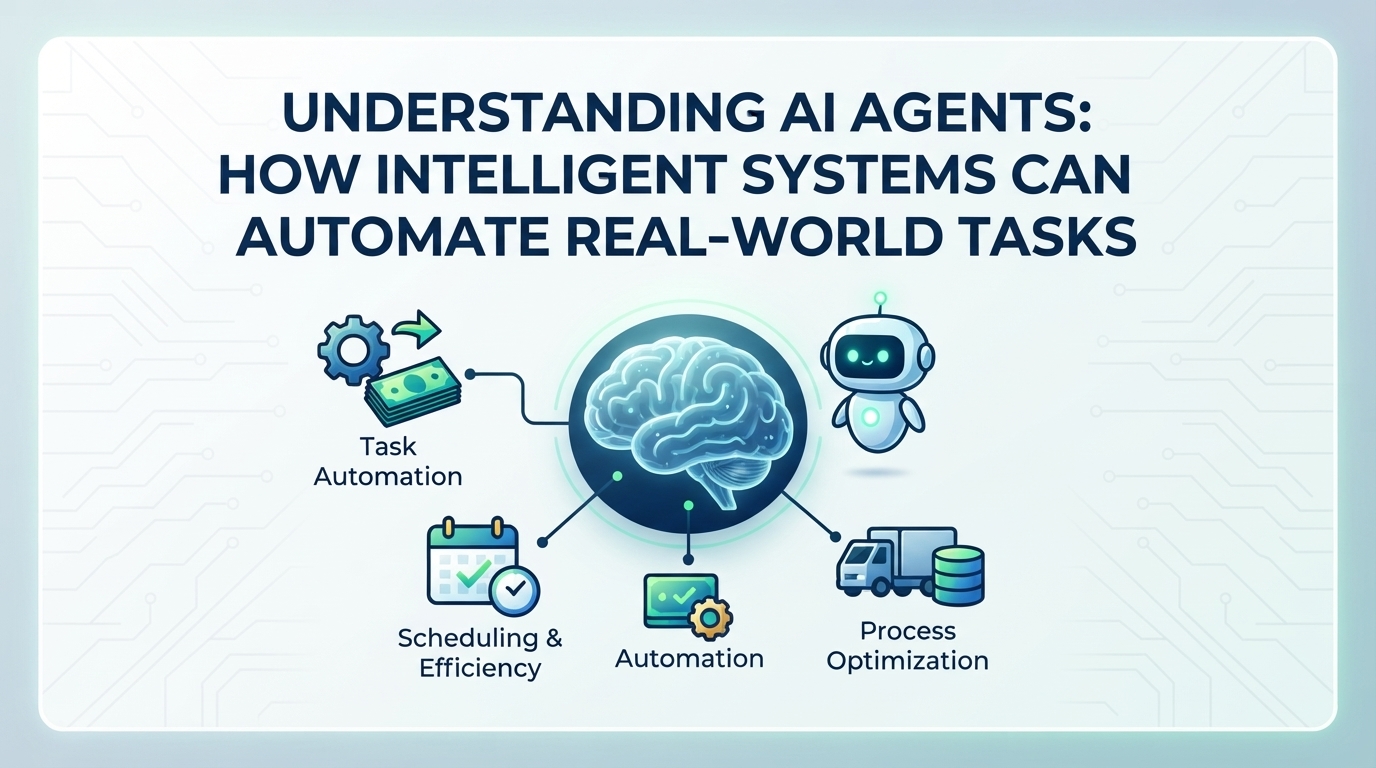
Artificial Intelligence is moving beyond systems that simply answer questions. Modern AI applications are increasingly capable of interacting with tools, processing information, making decisions within defined workflows, and performing tasks with limited human intervention.
These systems are commonly known as AI agents.
What Exactly Is an AI Agent?
An AI agent is a software system that uses an AI model to interpret a task, decide what action to take, and interact with available tools to achieve a defined objective.
Unlike a traditional chatbot that mainly generates text responses, an AI agent can perform actions through external services and APIs.
For example, imagine asking an AI assistant to organize a meeting. Depending on its permissions and available integrations, it could check calendar availability, identify suitable times, create an event, and confirm the result.
How Do AI Agents Work?
A typical AI agent consists of several components:
- Language Model: Interprets user instructions and helps determine the next action.
- Tools: Allow the agent to interact with APIs, databases, files, and external services.
- Memory: Maintains relevant information and context across interactions.
- Workflow: Defines how tasks, decisions, and tool executions are coordinated.
- Execution: Performs the selected actions and returns the results.
The agent may repeat this process several times until it completes the task or determines that human assistance is required.
Understanding Tool Calling
Tool calling is one of the most important capabilities in agent development.
For example, a business automation agent might have access to:
- A customer database to retrieve customer information.
- An email API to prepare customer responses.
- A task management API to create follow-up tasks.
- A document search tool to retrieve relevant business information.
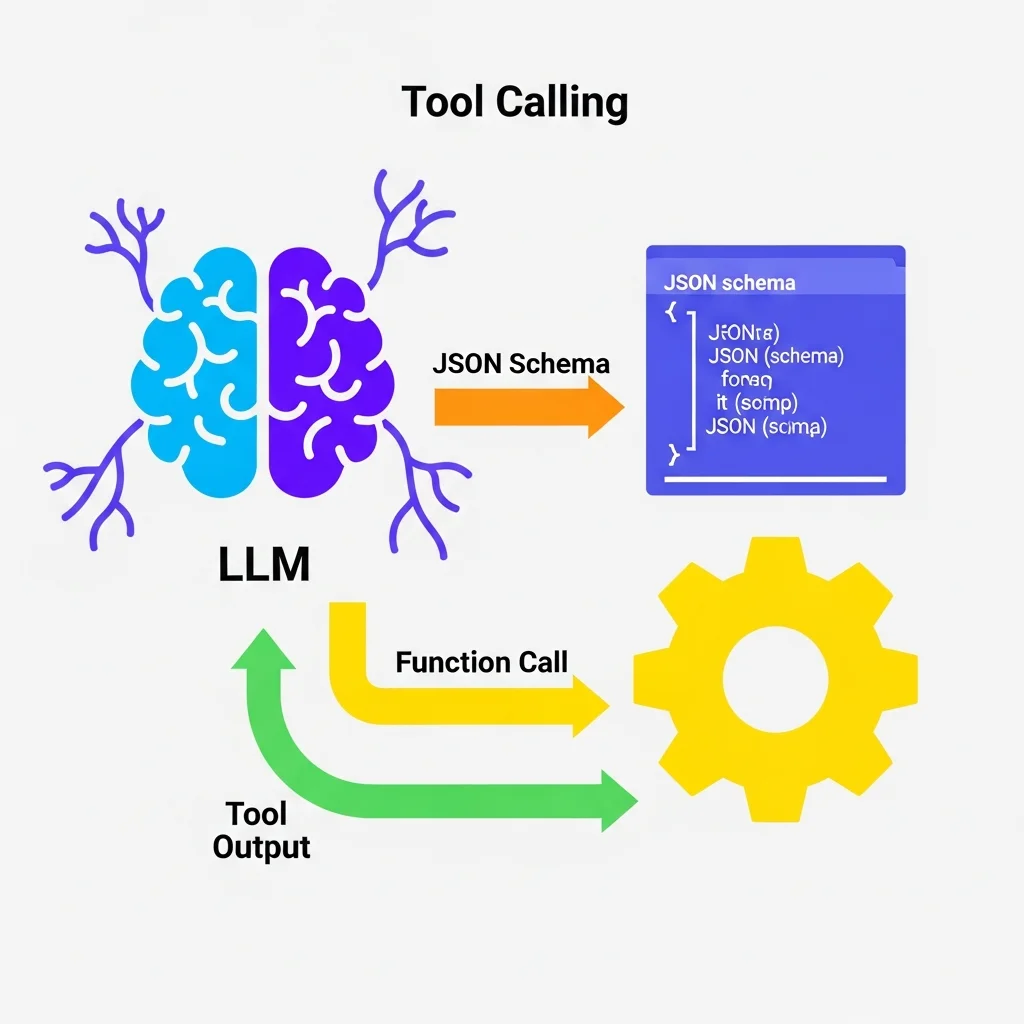
The language model determines when an available tool is appropriate, while the application executes the corresponding operation.
Frameworks for Building AI Agents
Python offers several tools for developing agentic applications.
- LangGraph: Supports stateful workflows, conditional execution, and human approval.
- LangChain: Provides integrations for language models and external tools.
- FastAPI: Allows developers to expose agent functionality through APIs.
Why Human Oversight Still Matters
AI agents can make incorrect decisions, misunderstand instructions, or execute inappropriate actions. This is particularly important when handling financial transactions, customer information, or sensitive business operations.
Developers should implement permissions, validation, execution limits, error handling, and human approval for high-impact actions.
Final Thoughts
AI agents represent an important development in modern software engineering. They make it possible to build applications that do more than generate responses.
By combining language models, tools, APIs, and structured workflows, developers can create intelligent systems that automate meaningful tasks and improve business productivity.